Which Hotel Points Are Worth the Most?
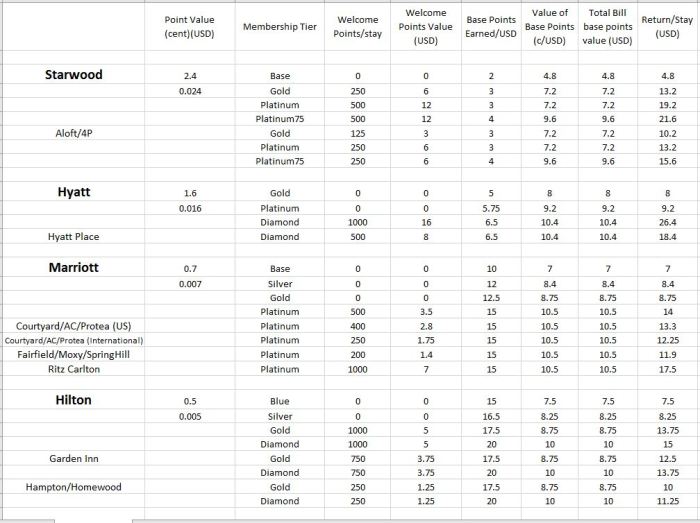
Which hotel points are worth the most? This exploration delves into the complex world of hotel loyalty programs, revealing the nuances of earning and redeeming points across various chains like Marriott, Hilton, and Hyatt. Understanding the factors influencing point value, such as location and seasonality, is crucial for maximizing rewards. This guide provides a comprehensive analysis, including practical strategies for maximizing your point value and evaluating their worth across different travel needs.
We’ll examine specific programs, like Marriott Bonvoy, to understand how points are earned and redeemed. A comparison of key features across leading hotel chains will be presented, along with a breakdown of how location, seasonality, and room type affect redemption rates. Ultimately, this analysis aims to equip you with the knowledge to make informed decisions about which hotel loyalty program aligns best with your travel style and preferences.
Introduction to Hotel Loyalty Programs: Which Hotel Points Are Worth The Most

Source: retiredandtravelling.com
Hotel loyalty programs are designed to reward frequent guests and encourage repeat business. These programs offer a range of benefits, from exclusive perks to significant savings on future stays. Understanding how these programs work and the various options available is crucial for maximizing travel value and making informed decisions.
Earning and redeeming points are the core components of these programs. Guests accumulate points through stays, bookings, or spending at partner establishments. These points can then be exchanged for various rewards, such as discounted room rates, upgrades, or complimentary amenities. The value of these points can vary significantly depending on the specific program and how they are redeemed.
Overview of Major Hotel Loyalty Programs
Hotel loyalty programs have become a crucial part of the travel industry, offering a range of benefits to frequent travelers. Different hotel chains have their unique programs, each with its own set of features and benefits. Examples include Marriott Bonvoy, Hilton Honors, and Hyatt. Understanding the specifics of each program is essential for travelers to choose the program that best aligns with their travel habits and preferences.
Comparison of Key Features: Which hotel points are worth the most
A comparative analysis of three major hotel chains’ loyalty programs highlights the variations in membership benefits, point earning rates, and redemption options.
| Hotel Chain | Membership Benefits | Point Earning Rate | Redemption Options |
|---|---|---|---|
| Marriott Bonvoy | Access to exclusive member events, priority check-in/check-out, guaranteed room upgrades, and discounts at partner restaurants and shops. Complimentary breakfast is often offered as a standard perk. | Points are earned based on nights stayed, spending at Marriott properties and partners, and through other activities such as booking flights with partners. The rate varies depending on the type of stay (e.g., a weekend stay earns fewer points than a week-long stay). | Points can be redeemed for various rewards, including room upgrades, free nights, and discounts on travel packages. They also offer options to redeem points for experiences like spa treatments or concert tickets. |
| Hilton Honors | Hilton Honors members can enjoy perks such as priority check-in/check-out, guaranteed room upgrades, and access to exclusive events. Free Wi-Fi is typically included. | Points are earned based on nights stayed, spending at Hilton properties and partners, and through other activities. The earning rate can vary depending on the hotel’s location and category. | Hilton Honors points can be redeemed for free nights at Hilton hotels worldwide, discounts on spa treatments, and other amenities. Partnerships with various airlines and car rental companies also exist. |
| Hyatt | Hyatt Gold Passport members gain access to expedited check-in/check-out, exclusive offers, and room upgrades. The program also often includes complimentary amenities, such as welcome drinks or high-speed internet. | Points are earned based on nights stayed at Hyatt properties and spending at partner establishments. The rate varies based on the category of the hotel and the type of stay. | Points can be redeemed for free nights at Hyatt hotels, discounts on spa treatments, and other experiences. Partnerships with airlines and other travel providers allow for a broader range of redemption options. |
Factors Influencing Point Value
Hotel loyalty programs offer a tempting reward system, but the value of those points isn’t always straightforward. Understanding the factors that influence point redemption is crucial for maximizing your rewards. These factors, from location to room type, can significantly impact the ultimate value you receive.
Location Impact
Location plays a pivotal role in determining point value. High-demand destinations, especially during peak seasons, command higher redemption rates. Points redeemed for a hotel in a popular tourist city during peak summer months will often be worth less than the same points used in a more off-season, less-visited location. This is due to the higher demand and potentially higher prices for rooms in the more desirable locations.
Seasonality Influence
Seasonality is a key factor. Off-season travel often yields better value for your hotel points. Hotels in popular destinations may offer discounted rates or promotions during the shoulder seasons or off-peak times. This means points can go further in the off-season, allowing you to redeem for a comparable or even more luxurious experience than in high-demand periods.
Room Type Effect
The type of room you redeem your points for significantly impacts the value. Luxury suites and premium rooms usually cost more and, consequently, require more points to redeem. Points redeemed for a standard room might yield a greater return in terms of value compared to a suite or a premium room, since the redemption value is often tied to the room’s price.
Redemption Options and Value
Different redemption options have varying impacts on point value. Some programs allow for flexible booking dates, enabling you to choose dates when points are more valuable. Others may have blackout dates or limited availability, reducing the flexibility and, thus, the value of the points. Consider the program’s redemption options carefully before you use your points. This might include booking dates, number of nights, or other factors that impact your choices.
Comparison of Hotel Chain Point Value
The value of points differs greatly between hotel chains. Factors like brand reputation, the overall cost of rooms at each chain, and the redemption policy play a substantial role in determining point value. For example, points from a luxury chain might be worth more for a high-end stay, while points from an economy chain might offer greater value for a more budget-friendly option.
Influence of Factors on Point Redemption Value
| Factor | Impact on Point Value | Example |
|---|---|---|
| Location | Higher demand locations, peak seasons require more points for equivalent stays. | Points for a hotel room in New York City during a major conference will likely be worth less than in a smaller town during the off-season. |
| Seasonality | Off-season travel often yields better value. | Points redeemed for a hotel in a popular ski resort during the summer months may be more valuable than during the winter season. |
| Room Type | Luxury suites and premium rooms typically cost more points to redeem. | Redeeming points for a standard room during a busy time of year will be more valuable than a suite during the same period. |
Analyzing Specific Hotel Point Programs
Understanding the intricacies of specific hotel loyalty programs is crucial for maximizing the value of your points. This involves delving into the earning mechanisms, the redemption options, and the relative value of points across different hotel categories. Analyzing these aspects allows for strategic planning to ensure that your points are used most effectively, maximizing the return on investment.
A key example to illustrate these principles is Marriott Bonvoy. This program, one of the most extensive in the industry, offers a wide range of earning and redemption opportunities, allowing members to tailor their point use to their individual needs.
Marriott Bonvoy Point Earning
Marriott Bonvoy offers various avenues for earning points, including stays at participating hotels, dining at participating restaurants, and through credit card partnerships. Members can accumulate points for their travel activities, strengthening the link between daily actions and reward accumulation. Furthermore, strategic use of co-branded credit cards can significantly accelerate point accrual, thereby potentially increasing the value of the program.
Marriott Bonvoy Point Redemption Options
Marriott Bonvoy provides a multitude of redemption options. These include booking hotel stays, upgrading rooms, purchasing travel experiences, and even making purchases at partner retailers. This comprehensive approach caters to diverse needs, allowing members to use their points for a range of experiences beyond simply hotel accommodations.
Marriott Bonvoy Point Value Across Hotel Categories
The value of Marriott Bonvoy points varies significantly depending on the hotel category. Generally, points are redeemable for better value at higher-end hotels, such as luxury resorts or upscale urban properties. This is because the demand for stays at these properties often leads to a higher demand for the associated points.
Point Redemption Rates
| Room Category | Point Redemption Rate | Example |
|---|---|---|
| Economy | 10,000 points per night (average) | A basic room at a Courtyard Marriott |
| Deluxe | 15,000-20,000 points per night (variable) | A comfortable room at a Sheraton or similar |
| Suite | 25,000+ points per night (variable) | A luxurious suite at a Ritz-Carlton or similar |
Note: These are average redemption rates. Actual rates may vary based on factors such as seasonality, location, and specific hotel.
Practical Strategies for Maximizing Point Value
Unlocking the full potential of hotel loyalty programs requires more than just accumulating points. Strategic planning and understanding the nuances of redemption are key to maximizing the value of your hard-earned rewards. This section explores practical strategies for turning those points into tangible benefits.
Effective point management involves more than just choosing a hotel; it’s about understanding the value proposition of each program and how to optimize your spending and redemption decisions. By implementing these strategies, you can leverage your loyalty program membership to enjoy exceptional travel experiences and significant savings.
Strategic Booking Practices
Understanding the intricacies of hotel booking dates and prices is paramount to getting the most out of your points. Analyzing the interplay between point redemption value, hotel pricing fluctuations, and specific program promotions can significantly impact your rewards. Hotels often offer discounts or special deals, which can be combined with your points to create even greater value.
Point Stacking Techniques
Point stacking, the combining of points from multiple programs, can dramatically enhance your overall value. This technique can involve earning points in different hotel loyalty programs, potentially leading to more substantial redemptions. It also involves the accumulation of points from different sources, like credit card rewards programs, which can be stacked with hotel points for a greater overall return.
Identifying Optimal Redemption Opportunities
Identifying the best redemption opportunities requires vigilance and a discerning eye for value. Consider factors such as the destination, time of year, and hotel category. Look for deals that allow for significant discounts on rooms or the possibility of combining points with other offers. Reviewing hotel program websites regularly, keeping an eye out for special promotions and dynamic pricing models, is crucial.
Potential Pitfalls of Point Redemption
While point redemption offers substantial benefits, potential pitfalls exist. One significant concern is the value depreciation of points over time. Some programs have expiration dates, and it’s vital to understand these limitations to avoid losing valuable rewards. Redemption options can be complex and involve hidden fees or restrictions. Understanding the terms and conditions of your specific hotel program is paramount.
Successful Point Redemption Strategies
Examples of successful point redemption strategies often revolve around understanding the value of different programs. Some travelers strategically redeem points for flights or other travel-related services offered by the hotel, which can lead to substantial savings. Combining hotel points with other rewards programs or booking promotions can significantly increase the value of the redemption. For instance, redeeming points during off-season periods often provides better value compared to peak seasons.
Practical Tips for Maximizing Point Value
- Regularly check hotel program websites: Look for promotions, dynamic pricing, and special deals.
- Understand point expiration dates: Be aware of potential losses due to inactivity.
- Combine points with other rewards programs: Leverage the combined value of different programs.
- Consider the value of different hotel categories: A higher-tier hotel often provides a greater return on your investment in points.
- Analyze hotel pricing trends: Look for opportunities to redeem points during periods of lower demand.
- Read the fine print: Understand all terms and conditions before making a redemption.
Evaluating Point Value Across Different Travel Needs
Source: skift.com
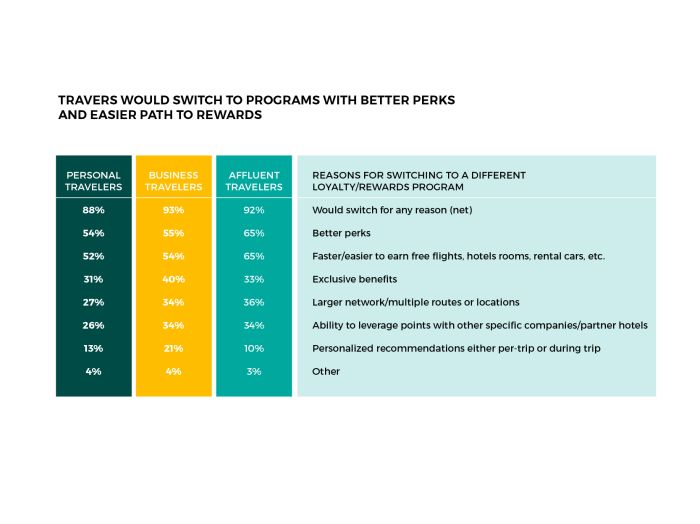
Hotel loyalty programs offer a wide range of benefits, but the value of those points can vary significantly depending on the traveler’s specific needs and preferences. Understanding how these points translate into value for different travel styles is crucial for maximizing their return. This section delves into the dynamic nature of point value, highlighting the factors that influence its worth across diverse travel scenarios.
The inherent value of hotel points is not static; it fluctuates based on factors like travel frequency, destination preferences, and the traveler’s particular needs. Different travelers derive varying levels of benefit from the same points, making a tailored approach essential to understanding the optimal use of rewards programs.
Business Traveler Point Value
Business travel often prioritizes factors like proximity to meeting locations, convenient amenities, and reliable transportation links. Points can be particularly valuable in securing a hotel room close to a conference center or airport, maximizing efficiency and minimizing travel time. The inherent value of these points often outweighs the potential for maximizing leisure-oriented amenities.
Leisure Traveler Point Value
Leisure travelers often prioritize relaxation, unique experiences, and desirable locations. For this group, the point value can be influenced by the amenities offered at a specific hotel, like a spa, pool, or restaurant. The location of the hotel relative to tourist attractions or activities is also a significant factor.
Point Value for Different Travel Durations
The value of hotel points changes with the length of the stay. For short trips, points might be used to secure a room at a preferred hotel chain, while for extended stays, the value of the points could be leveraged to enhance the overall experience. Hotels often offer suites or additional benefits for longer stays, making the point value more significant.
Factors Influencing Point Value for Specific Travel Styles
Numerous factors influence the perceived value of hotel points for particular travel styles. These include the traveler’s preferred hotel chain, the time of year for travel, and the availability of desired rooms and amenities. A frequent traveler might accumulate a high point balance and gain access to exclusive benefits and preferred room upgrades.
Visual Comparison of Point Value Across Various Travel Needs
| Travel Need | Point Value (Hypothetical Example) | Justification |
|---|---|---|
| Business Trip (1 Night) | 1000 points | High value due to location proximity to meetings/airport |
| Leisure Trip (3 Nights) | 1500 points | Higher value for longer stay, potential for premium amenities, and location |
| Family Vacation (7 Nights) | 2500 points | Significant value for a longer family trip, potentially offering multiple rooms or suites. |
*Note:* This table provides a hypothetical example. Actual point values will vary based on the specific hotel loyalty program, the hotel, and the traveler’s individual needs.
Illustrative Case Studies of Point Redemption
Successfully redeeming hotel points requires a strategic approach, understanding the nuances of various programs, and a keen eye for value. This section explores real-world examples of individuals and groups who have maximized their hotel rewards, showcasing the potential benefits of thoughtful planning and execution.
Effective point redemption often involves more than simply choosing the cheapest room; it encompasses the entire experience and maximizing the overall value. By examining these case studies, we can glean insights into strategies that can lead to optimal rewards for travelers.
Successful Point Redemption Strategies for Business Travelers
Strategic planning is crucial for business travelers seeking to leverage hotel points. A frequent business traveler who consistently stays at the same hotel chain could earn substantial points quickly. This allows them to redeem points for upgrades, premium amenities, and even exclusive experiences, all of which enhance the overall business trip experience. By accumulating points over time and carefully selecting redemption options, business travelers can significantly reduce costs associated with lodging.
- Case Study 1: The Frequent Flyer: A consultant, regularly traveling for business to a specific city, consistently stayed at a particular hotel chain. Over two years, they amassed sufficient points to redeem for a suite upgrade during a critical client meeting. The upgraded room, with its enhanced amenities and spacious layout, significantly improved the presentation environment and facilitated productive discussions. This improved impression on clients and contributed to the overall success of the project.
- Case Study 2: The Conference Attendee: A team of researchers attending a large academic conference utilized hotel points for a group room booking. Instead of the standard rooms, they opted for a larger suite that accommodated all team members comfortably. This allowed them to hold collaborative meetings and brainstorm effectively, ultimately leading to significant advancements in their research projects. The extra space and amenities proved invaluable for the team’s success.
Maximizing Point Value for Leisure Travelers
For leisure travelers, hotel points can be used to fund more extravagant experiences. These can include premium accommodations, exclusive dining options, and enhanced leisure activities, leading to memorable trips.
- Case Study 3: The Family Vacation: A family of four used their accumulated hotel points to fund a luxury family vacation at a resort with exceptional amenities. The points were redeemed for a multi-room suite, offering ample space and multiple living areas for the entire family. They also used their points to book private dining experiences, spa treatments, and excursions, leading to a lavish and unforgettable family vacation.
- Case Study 4: The Romantic Getaway: A couple planning a romantic weekend getaway redeemed hotel points for a stay in a boutique hotel known for its unique ambiance and personalized services. The points also covered the cost of a couple’s massage, a private wine tasting, and a romantic dinner overlooking the city. This strategy resulted in an intimate and luxurious getaway, exceeding their expectations.
Last Recap

Source: fastly.net
In conclusion, maximizing the value of your hotel points requires a strategic approach. By understanding the intricacies of various programs, the impact of factors like location and seasonality, and the practical strategies for maximizing redemption opportunities, you can transform your travel experiences into exceptional value. Whether you’re a frequent business traveler or a leisure seeker, this analysis provides valuable insights into navigating the world of hotel loyalty programs and ensuring your points are working for you. Ultimately, the best approach depends on your specific needs and preferences. By carefully considering the factors discussed, you can make the most of your hard-earned points and enjoy unparalleled travel rewards.